

A storefront sign that goes dark at sunset is only doing half its job. In New York, where restaurants fill up at 8 PM, bars run until 4 AM, and retail strips in neighborhoods like the East Village or White Plains downtown see foot traffic well into the evening, illuminated signage is not a premium upgrade. It is the baseline for any business that wants to be visible when its customers are actually walking by.
Illuminated signs, also called lighted signs, come in several distinct formats, and the differences between them matter more than most business owners realize before they start shopping. Channel letters and lightbox signs look completely different on a storefront. LED signs and neon-style signs have different energy costs and lifespans. Backlit signs and halo-lit letters create different visual effects that suit different brand aesthetics.
This guide covers every major illuminated sign option available for New York businesses, what each one typically costs, how long each lasts, and what to expect from the process of ordering and installing one.
Why Illuminated Signs Matter More in New York Than Almost Anywhere Else
New York City has more than 8 million residents and tens of millions of annual visitors. On any given evening, the streets of Midtown Manhattan, downtown Brooklyn, and the main commercial corridors of Westchester County are busier at 9 PM than most cities are at noon. A non-illuminated sign in this environment effectively disappears for a significant portion of each day.
Beyond pure visibility, illuminated signs send a signal about a business. A well-maintained, well-lit sign communicates that a business is active, professional, and worth entering. A dark or dimly visible storefront, even if the business is open, communicates the opposite. Research from the Sign Research Foundation consistently shows that exterior signage is the most direct contributor to walk-in traffic for brick-and-mortar businesses and among all sign types, illuminated formats produce the highest visibility metrics.
For New York businesses on high-competition streets or in commercial buildings where multiple tenants compete for the attention of the same building occupants, illuminated signage is one of the clearest differentiators available.
The Main Types of Illuminated Signs for New York Businesses
Each illuminated sign format has a distinct appearance, cost structure, and ideal use case. Here is what New York business owners need to know about each one:
- Channel Letter Signs
Channel letters are individually fabricated three-dimensional letters mounted directly to a wall or raceway. Each letter is a separate metal or acrylic shell containing LED lighting. Channel letter signs are the dominant exterior sign format for retail storefronts, restaurants, and service businesses across New York City and Westchester because they look custom, professional, and are highly readable at distance.
There are three main channel letter configurations: front-lit (light shines forward through a translucent face), reverse-lit or halo-lit (light illuminates the wall behind the letter, creating a halo glow), and open-face (the LED module is exposed for a more industrial look). Each creates a different visual effect and suits different brand aesthetics.
Channel letter signs are the most common illuminated sign choice for New York storefronts and represent the highest-visibility option for businesses on pedestrian streets.
- Lightbox Cabinet Signs
A lightbox sign, also called a cabinet sign or box sign, is an illuminated enclosure with a translucent face panel that displays the business name, logo, and graphics. LED modules inside the cabinet backlight the face panel, producing even, consistent illumination across the entire sign face.
Lightbox signs are cost-effective, easy to update (the face panel can be replaced without replacing the cabinet), and well-suited for New York businesses that want a clean, well-lit display without the complexity of individually fabricated letters. They are common in shopping centers, strip malls, and commercial parks throughout Westchester County and are also used extensively in multi-tenant building directories.
- LED Backlit and Backlit Acrylic Signs
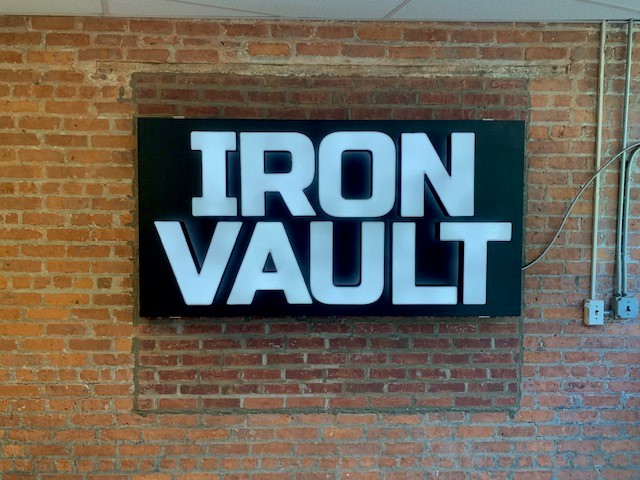
Backlit signs use LED panels mounted behind a translucent acrylic or fabric face to create a clean, even glow. They are thinner and lighter than traditional cabinet signs and work particularly well for interior lobby applications, retail environments, and buildings with mounting restrictions that preclude projecting signs.
For New York businesses in multi-tenant office buildings, professional services, medical offices, financial firms throughout Manhattan and Westchester, backlit lobby signs are a high-impact upgrade over standard dimensional letters and are one of the most requested formats from corporate tenants.
- Neon-Style LED Signs
LED neon signs replicate the aesthetic of traditional glass neon using flexible LED strip lighting bent into custom shapes and text. They require no gas, no glass, and far less electricity than traditional neon while producing nearly identical visual results. For New York bars, restaurants, boutiques, and creative businesses, neon-style LED signs have become the dominant choice for both window displays and interior feature walls.
LED neon signs are available in custom text, logos, and shapes. They are lightweight, can be mounted on a variety of surfaces, and are appropriate for both interior and exterior applications where a distinctive, artistic sign is the goal.
- Halo-Lit Dimensional Letters
Halo-lit letters, also called reverse-lit or backlit dimensional letters, are typically fabricated from brushed metal (aluminum or stainless steel) and mounted off the wall surface. LEDs inside the letter housing illuminate only the space between the letter back and the wall, creating a distinctive glow around the letter perimeter rather than through the face.
Halo-lit signs project a premium, architectural aesthetic that is particularly well-suited for lobbies, corporate headquarters, law firms, financial institutions, and high-end retail in New York and Westchester. They are frequently specified for buildings with design guidelines that restrict channel letters or cabinet signs on the exterior facade.
- Illuminated Projecting (Blade) Signs
Projecting signs mount perpendicular to the building facade, extending out over the sidewalk to create visibility from both directions of foot traffic rather than just from head-on. Illuminated blade signs are commonly used for hotels, restaurants, and service businesses in dense New York urban environments where a parallel-mounted sign would only be visible from directly in front of the storefront. Projecting signs in New York City typically require a Department of Buildings permit and must comply with clearance requirements above the sidewalk.
Illuminated Sign Types at a Glance: New York Business Guide
Use this comparison to identify which illuminated sign format best matches your business type, location, and budget before requesting a quote:
| Sign Type | Best For | Exterior / Interior | Relative Cost | Lifespan | Permit Req. (NYC) |
| Channel Letters | Retail, restaurants, storefronts | Exterior (primary) | Mid–High | 7–10+ years | Usually required |
| Lightbox Cabinet | Shopping centers, strip malls, directories | Exterior / Interior | Mid | 8–12 years | Usually required |
| LED Backlit | Lobbies, offices, retail interiors | Interior (primary) | Low–Mid | 5–8 years | Interior: rarely |
| Neon-Style LED | Bars, restaurants, boutiques, creative businesses | Interior / Window | Low–Mid | 5–8 years | Window: check rules |
| Halo-Lit Letters | Corporate, law, finance, luxury retail | Interior / Exterior | High | 10+ years | Exterior: usually |
| Projecting/Blade | Hotels, dense urban corridors | Exterior | Mid–High | 8–12 years | Required |
What Do Illuminated Signs Cost for New York Businesses?
Illuminated sign costs in New York vary based on sign type, physical size, materials, fabrication complexity, and installation requirements. Rather than specific prices, which change with material costs and project specifics, here is a practical cost framework for each major sign type:
Channel letter signs: Channel letters are a mid-to-high investment for most New York businesses. Cost drivers include letter height, total sign width, font complexity, illumination type (front-lit vs. halo-lit), and whether a raceway mount or flush mount is used. Custom fabricated letters for a standard retail storefront typically represent a significant but recoverable investment given their 7–10+ year lifespan and 24/7 visibility.
Lightbox cabinet signs: Cabinet signs are generally more cost-effective than channel letters of equivalent size because they are simpler to fabricate. The main advantage for cost-conscious New York businesses is that only the face panel needs to be replaced if branding changes, the cabinet itself can be reused.
LED backlit signs: Backlit acrylic signs for interior lobby and retail applications occupy a lower-to-mid cost range. Their smaller physical profile and simplified installation compared to exterior signs make them an accessible entry point for New York businesses upgrading from non-illuminated lobby signage.
Neon-style LED signs: LED neon signs are among the most accessible illuminated sign options for New York businesses on a tighter budget. Custom text or logo pieces in standard sizes can be produced at a fraction of the cost of traditional glass neon, with similar visual impact.
Halo-lit dimensional letters: Halo-lit signs represent the premium tier of illuminated business signage. The material quality, fabrication precision, and architectural finish required for a proper halo-lit installation make them a higher-investment choice, appropriate for businesses where the quality signal to clients and visitors is part of the value proposition.
For all sign types, New York City installation costs reflect local labor rates, permitting fees (where applicable), and any lift or access equipment required for high-mounted exterior signs. New York Sign Company provides custom quotes that include all fabrication, hardware, and installation costs. Request a free consultation to get a project-specific estimate for your location.
Permits, Landlords, and Practical Considerations for Illuminated Signs in New York
Ordering an illuminated sign in New York is not as simple as choosing a design and waiting for delivery. There are practical requirements that vary by sign type, location, and building type.
NYC permit requirements: Most exterior illuminated signs in New York City require a permit from the NYC Department of Buildings. The permit process involves sign specifications, a licensed sign hanger, and in some cases a PE stamp for larger installations. New York Sign Company handles the permitting process for exterior sign projects and ensures all work is code-compliant before installation begins.
Westchester municipality requirements: Westchester County municipalities each have their own sign ordinance. New Rochelle, Yonkers, White Plains, and other Lower Westchester cities regulate sign area, illumination levels, and setback requirements. Requirements vary enough between municipalities that it is worth confirming local rules before finalizing a sign design.
Landlord sign criteria: Many New York commercial leases, particularly in Manhattan and in larger Westchester shopping centers, include landlord sign criteria that restrict sign type, size, illumination method, and mounting approach. Reviewing your lease’s sign section before ordering prevents costly revisions. New York Sign Company can work within landlord criteria to develop a compliant design that still maximizes visibility.
Electrical requirements: Illuminated signs require a dedicated electrical connection to the sign location. In existing buildings, this sometimes requires an electrician to run conduit to the sign position before installation. Factor electrical work into the project timeline and budget, particularly for exterior signs on older New York buildings where access can be more complex.
Working with a sign company that understands the New York permitting environment and has an established relationship with the necessary trades, saves time, prevents delays, and ensures the finished sign is fully compliant.
Illuminated Business Signs in New York: Your Questions AnsweredWhat is the difference between channel letter signs and lightbox signs?Channel letter signs are individually fabricated three-dimensional letters, each letter is a separate illuminated unit mounted to the wall. Lightbox signs are enclosed cabinets with a single translucent face panel that displays the full business name and logo. Channel letters tend to look more architectural and custom; lightbox signs offer a clean, uniform illuminated surface that is easier and less expensive to update when branding changes. How long do illuminated signs last for New York businesses?With LED illumination, which is standard in all new illuminated sign fabrication, the light source typically lasts 50,000 to 100,000 hours, well beyond the practical lifespan of the sign structure itself. Channel letter signs and cabinet signs properly fabricated and maintained in the New York climate generally last 7 to 12 years before requiring major refurbishment. The structure and electronics last significantly longer than neon predecessors. Do I need a permit for an illuminated sign in New York City?In most cases, yes. Exterior illuminated signs in New York City require a permit from the NYC Department of Buildings, a licensed sign hanger, and compliance with the NYC sign code. The specific requirements depend on sign size, mounting method, and location. New York Sign Company manages the permitting process for all exterior sign installations and ensures full code compliance before work begins. What type of illuminated sign is best for a New York restaurant or bar?For exterior visibility, front-lit channel letters are the most effective option for New York restaurants and bars on pedestrian streets. For interior and window applications, neon-style LED signs are the dominant choice, they create a distinctive visual identity, are highly photographable for social media, and require no gas or glass maintenance. Many New York hospitality businesses use both: channel letters outside, LED neon inside. Can illuminated signs be installed in a commercial building with landlord restrictions?Yes, with the right approach. Most New York commercial leases include a sign criteria document that specifies permitted sign types, sizes, and mounting methods. New York Sign Company reviews lease sign criteria before finalizing designs and develops compliant solutions that still maximize visibility within the given constraints. In buildings with strict restrictions, backlit acrylic signs and halo-lit letters are often the most effective options that remain within typical landlord guidelines. What is the turnaround time for a custom illuminated sign in New York?Turnaround time for custom illuminated signs depends on the sign type and complexity. LED neon signs and backlit acrylic panels can often be produced in one to two weeks. Custom channel letter signs and larger cabinet signs typically require three to five weeks from design approval to installation, including permitting time where applicable. Rush production is available for select sign types, contact New York Sign Company to discuss your specific timeline. |