
Business signs drive walk-in traffic for New York storefronts by making a business visible, credible, and easy to find, before a potential customer ever walks through the door. Research from the Sign Research Foundation shows that 76% of consumers have entered a store they had never visited before simply because of its sign, and 68% have made a purchase as a direct result of a sign they saw. For New York businesses competing in high-foot-traffic corridors, from Midtown Manhattan to White Plains to Williamsburg, the right storefront signage is one of the highest-return investments a business owner can make.
Walk past any block in Manhattan, New Rochelle, or downtown Brooklyn and you will notice something: the businesses that attract the most foot traffic are almost never the quietest ones on the street. They have clear, well-lit signs. They have window graphics that communicate an offer or create curiosity. Their entrance looks intentional. Their storefront signals, before a customer makes a conscious decision, that this business is worth stepping into.
Signage is not decoration. For New York storefronts operating in a competitive retail environment, business signs are functional marketing infrastructure and they work 24 hours a day, seven days a week, without a media budget. This guide covers exactly how signage drives walk-in traffic, what types of business signs deliver the best results for New York storefronts, and what to consider before ordering.
Why the Right Sign Is the Most Undervalued Asset a New York Business Owns
Most New York business owners spend thousands on digital advertising to reach customers sitting at home. Their storefront sign, which reaches every person who walks, drives, or rides past it every single day, gets almost no strategic attention.
A storefront sign in a moderate-traffic New York corridor can generate tens of thousands of impressions per month at zero ongoing cost. When you factor in that a well-designed sign reduces customer acquisition cost for every walk-in it produces, the ROI case becomes straightforward. The Sign Research Foundation has documented that on-premise signage is the number-one form of advertising for small and medium businesses, outranking social media, paid search, and print.
The challenge is not whether signs work. The challenge is making sure your signs are working as hard as they should for your specific New York location, your customer base, and your brand.
The Five Signage Factors That Determine Whether Customers Walk In
Not all business signs produce the same result. These are the factors that separate a sign that generates consistent walk-in traffic from one that blends into the background:
- Visibility from the Right Distance
A sign that cannot be read from 30 feet away on a New York sidewalk is not doing its job. Legibility at distance is determined by letter height, font choice, and contrast. For most New York storefronts, the primary sign needs to be readable at a minimum of 25–40 feet to capture pedestrians and slow-moving traffic. Illuminated signs extend that window into the evening hours, a critical advantage for New York businesses that see foot traffic until 10 PM or later.
- Brand Clarity in Under Three Seconds
A pedestrian moving at normal walking speed will spend roughly three seconds looking at your storefront before deciding whether to slow down. Your signage needs to communicate what you do, that you are worth stopping for, and ideally, something specific about your offer in that window. Confusion or visual clutter at this stage kills walk-in potential regardless of how good your product or service is.
- Consistency Between Exterior and Interior
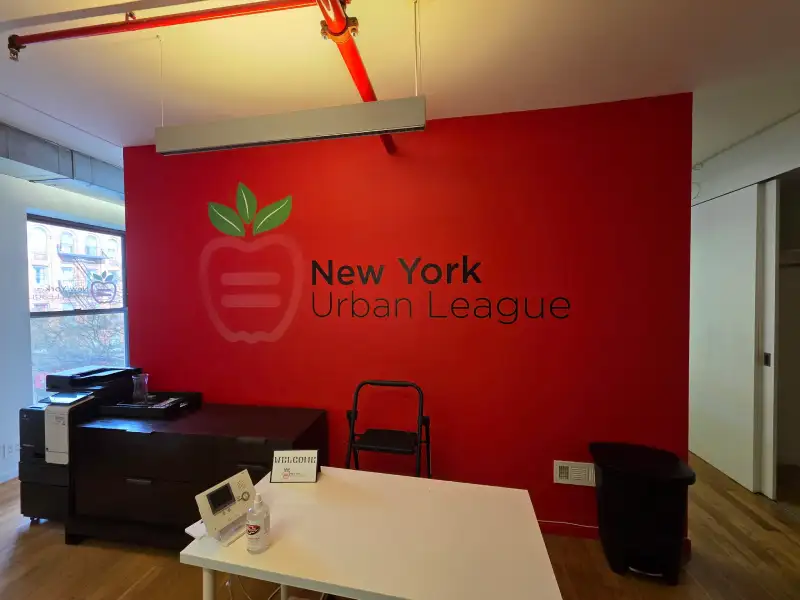
The moment a customer steps through your door, their impression either confirms or contradicts what your exterior signage communicated. Businesses that invest in a strong exterior sign and neglect interior signage often see a drop-off in conversion at the door. Lobby signs, reception area signage, and directional signs inside the space reinforce the initial impression and build confidence in a new customer. For New York businesses, this is especially relevant in multi-tenant buildings where the path from street to suite requires clear wayfinding.
- Seasonal and Promotional Adaptability
Static signs are table stakes. The New York businesses that consistently outperform their neighbors in foot traffic are the ones that layer seasonal window graphics, A-frame sidewalk
displays, and promotional banners onto their permanent signage. These adaptable elements create novelty and novelty is one of the most reliable triggers for walk-in behavior among people who pass your location regularly.
- ADA Compliance and Accessibility
This is less about foot traffic generation and more about not losing it. New York State and the ADA require compliant signage for most commercial properties. Non-compliant signage creates accessibility barriers, exposes property owners to liability, and communicates to customers with disabilities that the business was not designed with them in mind. ADA-compliant signage, including Braille, tactile elements, and proper mounting heights, is a baseline requirement, not a premium option.
Which Business Signs Drive the Most Foot Traffic in New York
Different sign types serve different roles in a foot traffic strategy. Here are the most effective for New York storefronts and how they work together:
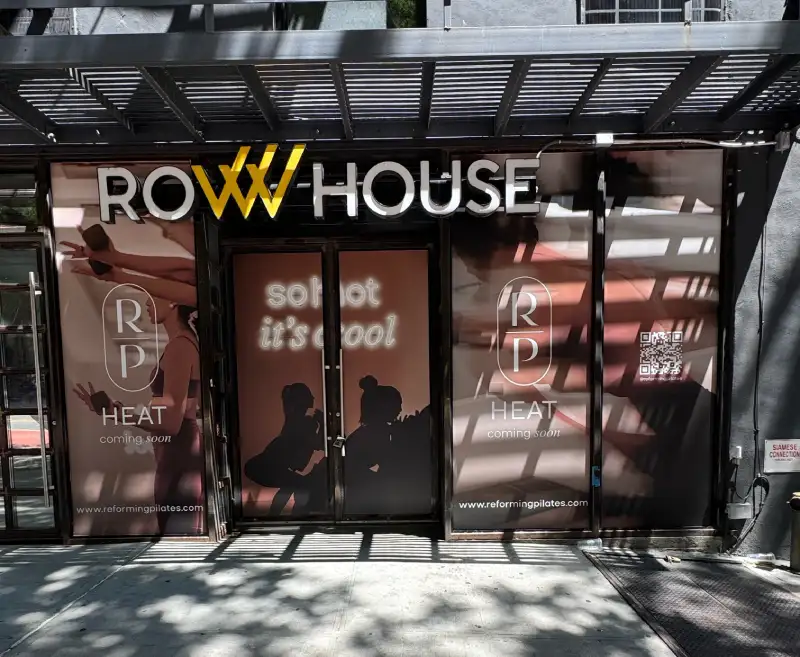
Channel-lit and illuminated signs: The standard for high-visibility primary signage in New York. Effective across the full 24-hour cycle, particularly in urban corridors where evening foot traffic is substantial. Professional illuminated signs are the single highest-impact exterior investment for most storefronts.
Window graphics and vinyl lettering: Versatile, cost-effective, and adaptable for seasonal promotions. Window graphics communicate hours, offers, and brand personality to pedestr
ians even when a storefront sign is not visible from a specific approach angle.
A-frame sidewalk signs: Particularly effective for restaurants, cafes, and service businesses in high-pedestrian New York corridors. A-frames intercept pedestrians at the final moment of decision, right at the point of entry and can be updated daily with specials, hours, or messaging.
Dimensional letters and lobby signs: While not a primary traffic driver, lobby and reception signage directly impacts conversion once a customer or prospect is inside. For professional services, medical offices, and corporate tenants throughout New York and Westchester, a well-executed lobby sign signals professionalism and increases the likelihood of a sale or retained engagement.
Banners and event displays: Temporary but highly effective for grand openings, promotions, and seasonal traffic peaks. For New York businesses preparing for holiday shopping season, restaurant week, or a neighborhood event, banners are the fastest and most visible way to announce something new.
Signage Considerations for New York,
Westchester County, and Brooklyn Businesses
Not every New York business faces the same signage environment. A restaurant in Midtown Manhattan operates under different visibility conditions, permitting requirements, and landlord restrictions than a professional services firm in White Plains or a retail shop in Park Slope. Understanding those differences is part of getting signage right.
New York City: High pedestrian density means visibility windows are short and competition for attention is intense. Signs must communicate quickly and clearly. Many NYC buildings have landlord sign criteria or landmark restrictions that govern sign size, placement, and illumination. Working with a sign company that understands city permit processes saves time and prevents costly mistakes.
Lower Westchester County (New Rochelle, Yonkers, White Plains): The signage environment is more mixed, street-level retail, commercial parks, and multi-tenant office buildings all coexist. Westchester businesses serving both local foot traffic and commuter audiences benefit from signs that are readable at moderate driving speeds as well as pedestrian pace. Durability in Westchester’s four-season climate is also a practical consideration, materials that hold up to ice, UV, and humidity outperform cheaper alternatives over the long run.
Brooklyn: Neighborhood character varies dramatically between Park Slope, Williamsburg, DUMBO, and Bay Ridge. Signage that fits the aesthetic of a neighborhood, while still meeting visibility and legibility standards, tends to outperform generic solutions. Brooklyn pedestrians are design-literate; a sign that looks thoughtfully made carries more weight than one that looks rushed or generic.
How to Evaluate Your Current Signage Before Ordering Something New
Before investing in new business signs, spend ten minutes doing what your customers do approach your storefront from the street. Ask these questions:
- Can you read the primary sign clearly from 30 feet away? If not, the font size, contrast, or condition is failing.
- Does the sign immediately tell a first-time visitor what the business does? Names alone are not enough.
- Is the sign visible at night or in poor weather? If illumination is missing or failing, a large segment of potential traffic is being lost.
- Does the exterior communicate the same brand quality as the interior and marketing materials? Inconsistency undermines trust.
- Is there anything on the storefront that is actively creating a negative impression faded vinyl, a broken lightbox, outdated messaging?
These questions do not require a design background to answer. They require the willingness to look at your own storefront the way a stranger does. The businesses in New York and Westchester that consistently attract walk-in traffic are the ones that do this regularly and fix what they find.
Work with a Sign Company That Knows New York
New York Sign Company has helped businesses across New York City, Lower Westchester County, and Brooklyn develop signage that actually works, not just signage that fills a wall or a window. From storefront business signs and illuminated channel letters to lobby signs and dimensional lettering, every project starts with understanding what the business needs to accomplish and what its customers see first.
If your current signage is not generating the walk-in traffic your location should support, that is a solvable problem. Get a free consultation and see what is possible for your space.
Business Signs in New York: Your Questions Answered
How much does a business sign cost in New York?
Business sign costs in New York vary based on sign type, size, materials, and installation complexity. Vinyl window graphics and A-frame signs are among the most accessible options, while illuminated channel letter signs and custom dimensional letter installations are higher-investment solutions. New York Sign Company provides free consultations and custom quotes for every project, contact us to discuss your specific space and goals.
What types of business signs are most effective for New York storefronts?
Illuminated signs, window graphics, and A-frame sidewalk displays consistently generate the most walk-in traffic for New York storefronts. Illuminated signs extend visibility into evening hours, window graphics communicate offers and brand identity to pedestrians, and A-frames intercept foot traffic at the point of entry. The right combination depends on your location, business type, and foot traffic patterns.
Do I need a permit for a business sign in New York City or Westchester?
Most exterior business signs in New York City require a permit from the NYC Department of Buildings. Westchester County municipalities each have their own sign ordinance requirements. New York Sign Company handles the permitting process for clients and ensures all signage meets local codes and building restrictions before installation.
How long does it take to get business signs made in New York?
Turnaround times vary by sign type. Simple vinyl window graphics and banners can be ready within a few business days. Custom illuminated signs, dimensional letters, and fabricated channel letters typically take two to four weeks from design approval to installation. Rush production is available for time-sensitive needs.
Can lobby signs and interior signage help my New York business attract more customers?
Interior signage, including lobby signs, reception area signs, and directional wayfinding, directly influences how customers experience your business after they walk in. A professional lobby sign reinforces the quality impression created by your exterior, increases perceived credibility, and reduces customer confusion in multi-suite buildings. For New York professional services firms, medical offices, and corporate tenants, interior signage is a direct contributor to client retention and referrals.
What is the difference between channel letter signs and flat-cut signs for New York businesses?
Channel letter signs are three-dimensional, individually fabricated letters mounted to a wall or raceway, typically illuminated from within using LED lighting. They are the highest-visibility option for most New York storefronts. Flat-cut signs are two-dimensional and non-illuminated, appropriate for interior applications, secondary signage, and settings where illumination is restricted. Both are available in custom sizes, fonts, and finishes.